Delivered templates for authors to publish content across various formats.
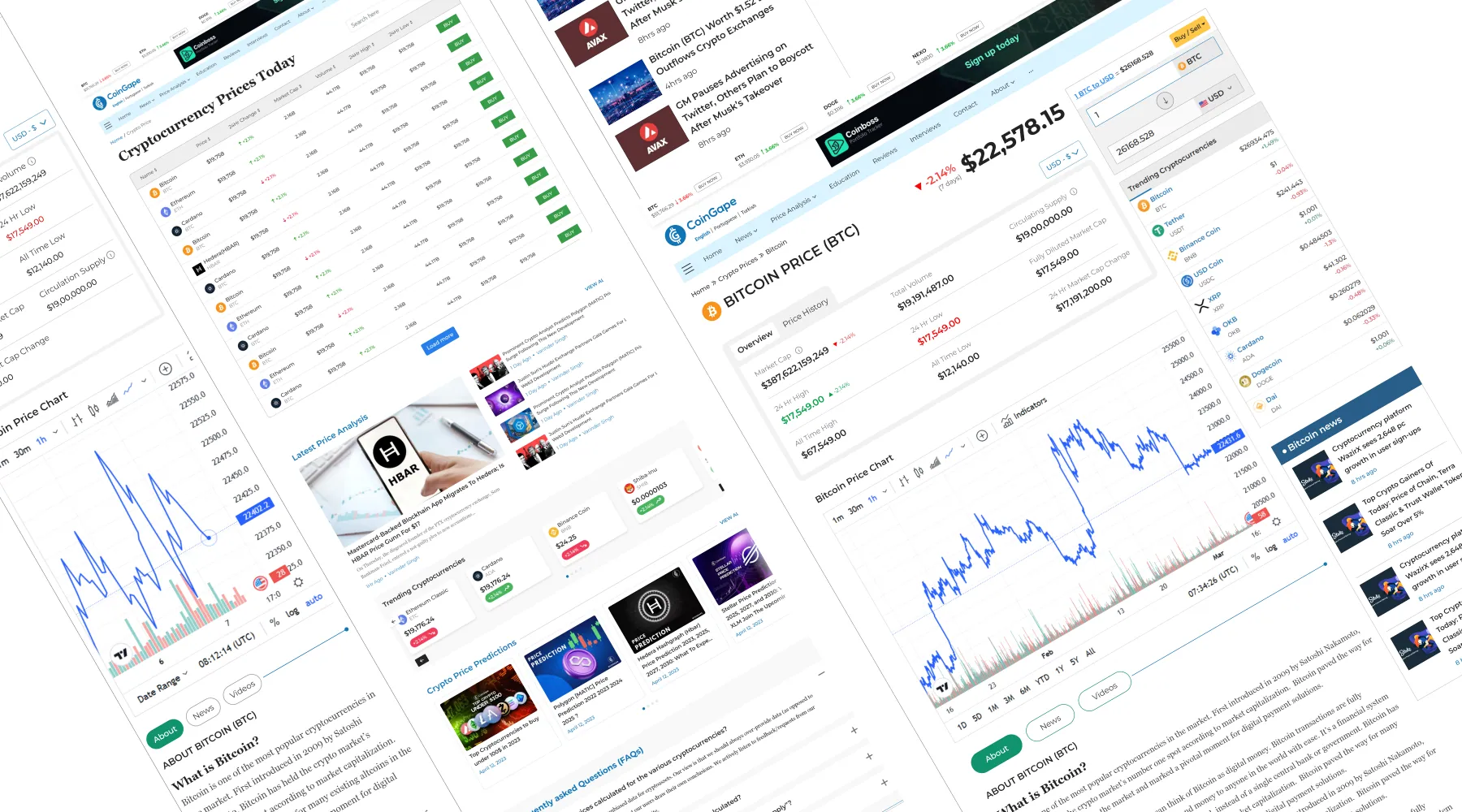
A ready-to-use content system to display live crypto market data. This included a homepage for the top 500 cryptocurrencies and individual coin detail pages. The goal was to enhance UX, drive conversions, and support editorial scalability.
Problem Statement
The media house needed:
A better user experience for discovering and exploring cryptocurrencies
More effective affiliate link conversions
Accessible, SEO-friendly content that could rank well on Google
Solution
1. Homepage for Top 500 Cryptocurrencies
Designed a clean, responsive layout showing the top 500 cryptocurrencies.
Included columns like live price, market cap, 24h volume, day/month change, and mini sparkline charts for trends.
Used visual hierarchy to make scanning quick and effortless.
2. Individual Crypto Detail Pages
Pulled all essential data dynamically using the CoinGecko API. Key sections included:
Real-time chart & key price stats
30-day price history chart
Price converter (USD ↔ Token)
FAQs about the crypto
Related news and other tokens for discovery
Approach
Data-Driven Design: All UI elements were based on real API data
SEO Compliance: Meta structure, headings, content blocks built for Google's crawlers
UX Improvements: Based on scroll depth, click heatmaps, and content priority
Impact
✅ Page Ranking & SEO Impact: Keyword-optimized structure and rich metadata helped index pages more effectively on Google.
✅ Traffic Boost: Organic traffic to crypto detail pages increased by 38%, driven by improved time-on-page, SEO-focused content blocks, and related article links.
I designed a reusable content template to help publishers create fast, consistent, and detailed project reviews for upcoming crypto tokens. This template was tailored to meet client requirements, serve as a repository for token-based projects, and improve search engine visibility for sponsored content.
Problem Statement
The editorial team faced these challenges:
Publishing project reviews took too long due to lack of structure
Reviews lacked consistency in layout and depth
Needed a scalable way to host and update project reviews
Solution
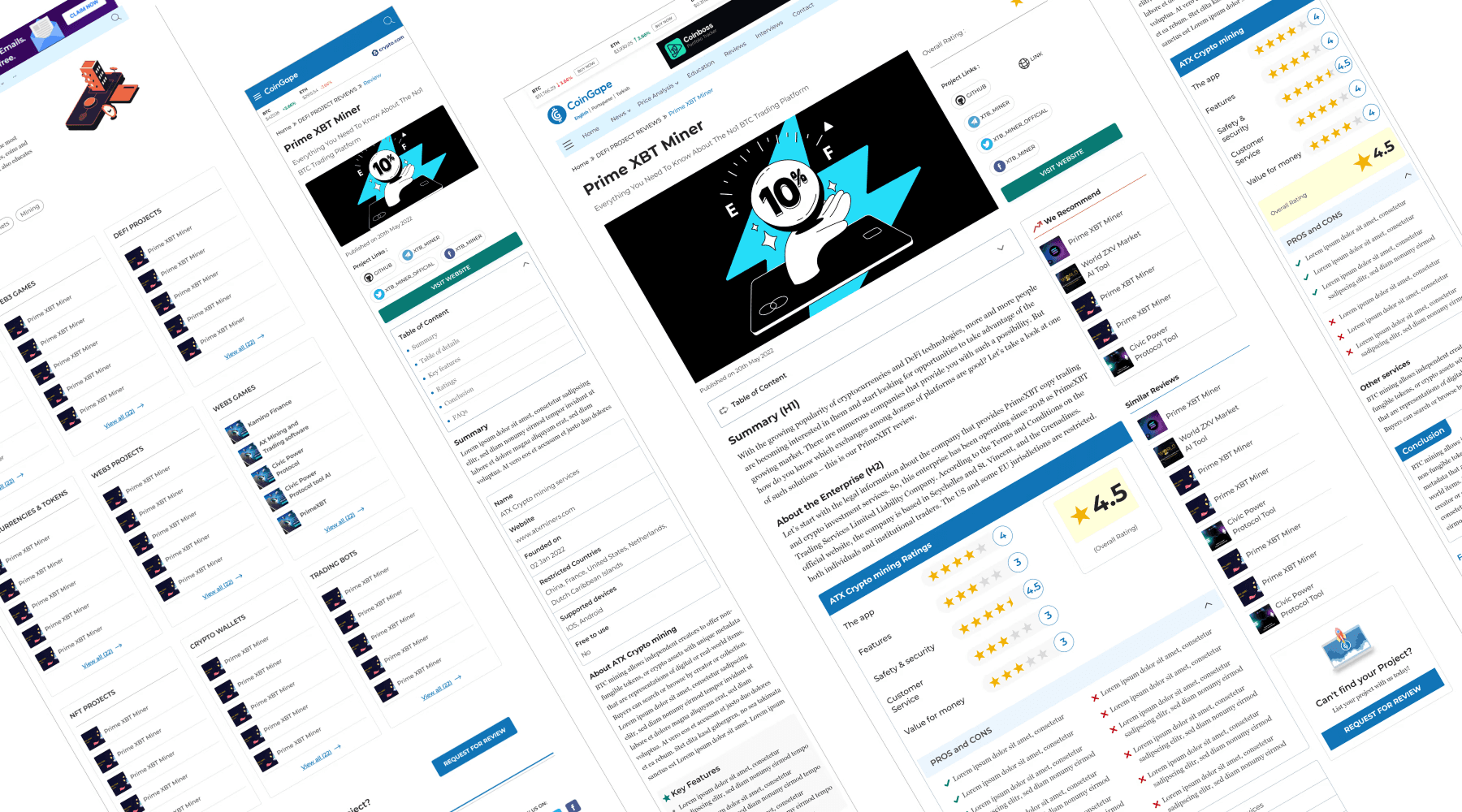
A modular Review template
The inner page featured a modular and consistent layout that included sections like the Project Overview, Vision & Goals, Team Details, a Roadmap, a Pros & Cons summary, and a visually highlighted Final Rating block.
These elements were designed to guide readers through a clear, structured narrative while giving editors a reliable framework to work within
Structured content blocks that allowed editors to:
Copy & paste sections easily
Maintain review flow across all pages
Impact
✅ Faster Publishing: Editors reduced time-to-publish by ~50% with pre-filled structure
✅ Improved Discoverability: Projects reviewed using this template ranked on Google for brand terms and key phrases
✅ CTR Increase: +17% due to optimized layouts, better visual hierarchy, and contextual affiliate placements.
✅ Content Uniformity: Maintained a trusted editorial tone and brand consistency across all reviews
I designed a clean and scalable blog template to help editors publish crypto news quickly and consistently. The primary goal was to improve readability while ensuring every article met SEO standards for better discoverability.
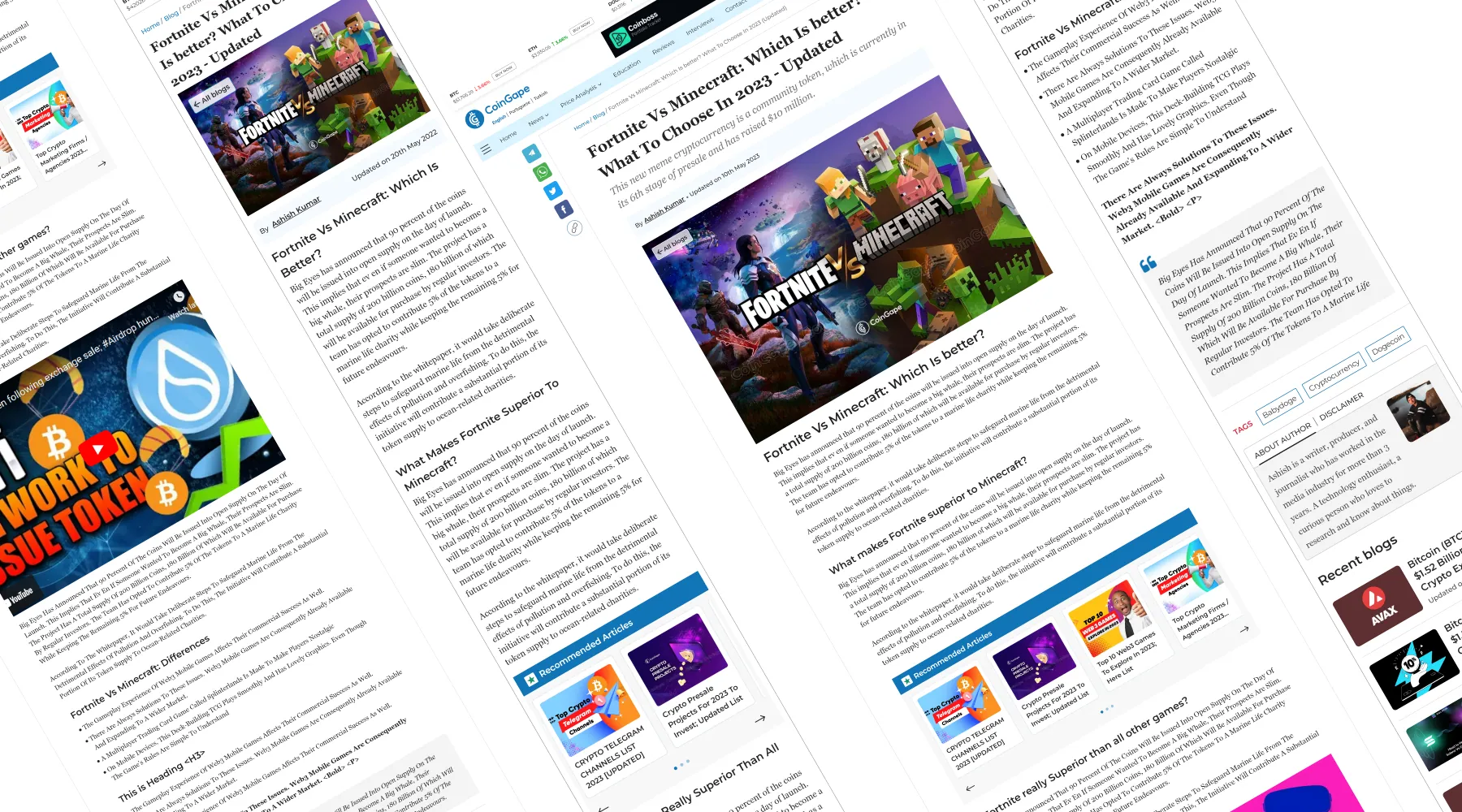
Problem Statement
Editors needed a consistent layout to publish daily news content
Existing templates were cluttered and not optimized for mobile
Articles weren’t ranking well on search engines due to poor structure
Solution
A modular Review template
The new blog template featured a simplified reading layout with proper heading hierarchy, consistent paragraph styling, and clear separation of content blocks. It included:
A clean hero section with title, date, and author info
In-article image support and callouts
Related posts and tags at the end
SEO-friendly structure with meta fields and schema support
Impact
The redesigned template significantly improved editorial workflow and content performance:
✅ Faster Publishing: Editors could post news stories 2x faster
✅ Improved SEO: Blog pages saw better indexing and visibility on Google
✅ Better User Experience: Cleaner layout led to increased time-on-page and scroll depth